
Blog
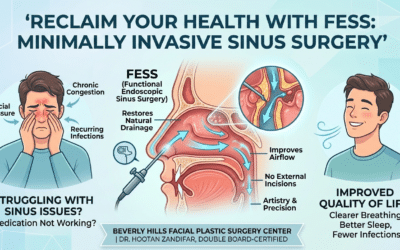
Advanced Functional Sinus Surgery at a Leading Facial Plastic Surgery Center in Beverly Hills
If you suffer from chronic sinus congestion, recurring infections, or persistent facial pressure that medication simply cannot resolve, you are not alone. Millions of Americans live with chronic sinusitis and related conditions that diminish their quality of life...
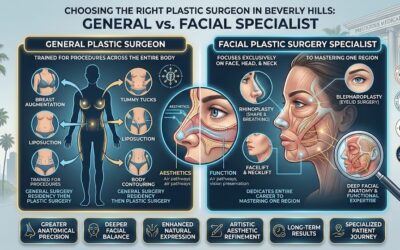
The Difference Between a General Plastic Surgeon and a Facial Plastic Surgery Specialist
We hear about people going to plastic surgeons in Beverly Hills for various procedures, but we do not know who the right surgeon is for any procedure. As a new patient to surgery and procedures, it is very difficult to choose a plastic surgeon. If you are considering...
The Invisible Work: Procedures Designed Specifically Not to Be Noticed
Facial plastic surgery has undergone a quiet transformation over the past decade. While earlier eras often emphasized dramatic change, today’s patients increasingly seek something very different: refinement so subtle that no one can identify exactly what has changed....
Face Architecture vs. Skin Quality: Which Matters More for Looking Young?
When people think about youthful appearance, their attention often goes straight to the skin. Smooth texture, even tone, and a radiant glow are widely associated with youth. But beneath the surface lies another critical factor that many patients overlook: facial...
Aesthetic Plateau: Why Some Faces Stop Improving Despite More Procedures
Facial aesthetics has advanced dramatically over the past two decades. With the rise of minimally invasive treatments, refined surgical techniques, and personalized care plans, patients today have more options than ever to enhance their appearance. Yet an increasingly...
The Consultation Gap: What Patients Hear vs. What Surgeons Actually Mean
A facial surgery consultation is one of the most important conversations a patient will ever have about their appearance. It is where expectations are formed, medical realities are explained, and trust begins to take shape. Yet even in the most thoughtful...
Surgical Aging vs. Natural Aging: How Operated Faces Age Differently Over Decades
Aging is one of the few experiences every human shares, yet no two faces age in exactly the same way. Genetics, lifestyle, environmental exposure, and medical history all shape how the face evolves over time. In recent decades, facial plastic surgery has become...
Facial Surgery After Massive Digital Self-Exposure: Patients Who Have Been Filmed for Years
In an era defined by constant cameras, many people are being documented more than ever before. From social media creators and remote professionals to executives appearing on webinars, countless individuals have spent years watching their own faces on screens. Over...

Why Septoplasty Requires Specialized Facial Plastic Surgery Expertise
The first thing that comes to mind when we talk about plastic surgery is the corrections that doctors make on the face or the body to remove marks or injuries. But plastic surgeons are not only known for their precision and mastery of the hands. One of the most...
When Less Is More: The Rise of Surgical Restraint in High-End Aesthetic Medicine
In aesthetic medicine, trends often mirror broader cultural shifts. For years, dramatic transformations captured public attention—sharper cheekbones, fuller lips, tighter skin, and sculpted jawlines. Today, however, a different philosophy is quietly redefining what...
